Abstract
Planning communications, but how? Most project managers do not make any communication plans and do not monitor or control them in any way, blindly carrying out communications. But since the methodology is designed for professionals in the field of project management, this approach is not acceptable.
This area of knowledge is quite easy to master, even in PMBok written in a simple and accessible language. It is considered that 90% of the time the Project Manager is communicating, and this is directly related to Communications. PMI distinguishes 5 Communications management processes:
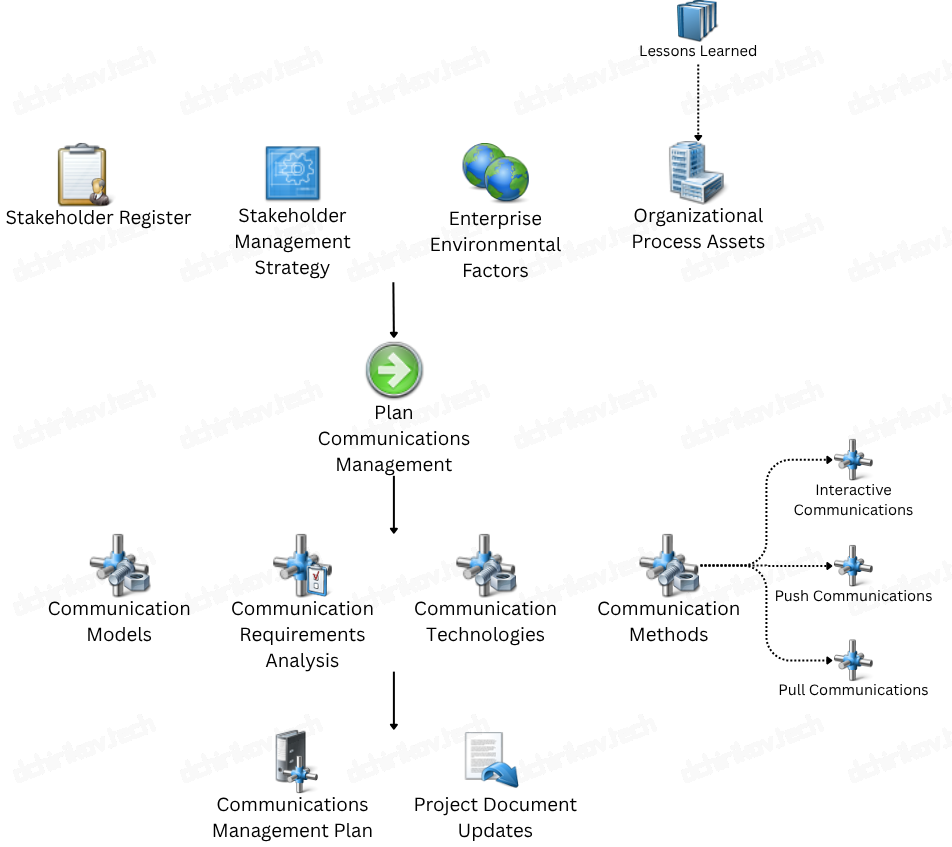
10.1 Plan Communications Management
Regardless of whether you do this process or not, for any of your projects, you plan communication. For example, when you have defined an Activity to execute and request a report on its execution, you plan communication. Or, for example, when you provide a Team Member with contact information Stakeholder, which is outside the Project Team, you also plan communication. The Plan Communications process is an integral part of any project, but they are often planned «on the fly», which is bad practice in terms of project management methodology.
Well, I decided to Plan Communications, and what does it take? To design a Communications Management Plan, which is the main output of this process, at least the following actions must be carried out:
- plan communications with each Stakeholder based on their preferences and interests (when, how, what issues to address and other similar questions);
- optimize the list of Communications channels that are present in the Project;
- compile a list of information provided for each Stakeholder;
- define the formats of information provided.
Of course, this is the minimum list of questions to be answered when planning communications. You can add any questions that you think are useful for communication management.
Since the Project is not carried out in a vacuum, it is assumed that each project has both vertical and horizontal communications. Interaction of the Project with the environment can be described as:

Provided information
The information to be provided will, of course, depend on the conditions under which the Project is carried out. The most common list of information provided is as follows:
- Project Charter;
- Project Management Plans (general Project Management Plan may be provided, or a plan for each individual area of knowledge);
- WBS;
- Project Schedule;
- List of upcoming meetings;
- List of topics for discussion at meetings;
- Resource requirements;
- Scheduled meetings with management;
- Information on project status;
- Problems;
- Project successes and failures;
- Change Requests;
- Change request fulfillment reports;
- Reporting delays;
- Contact details of various Stakeholders;
- Templates for project performance reports;
- Project performance reports;
Communication Types
When developing a plan of interaction with the Stakeholder, it is necessary to choose the method(s) of communication. There are 4 types:
| Type | Examples |
|---|---|
| Formal | Written | Discussion of complex issues, project management plan, charter and other important documents |
| Formal | Verbal | Presentations, speeches |
| Informal | Written | E-mail, text messages (skype, icq, etc.), sms messages, etc. |
| Informal | Verbal | Negotiations, meetings |
Effective Communications
The effectiveness of communications is determined by the quality of information exchanged between the parties to communications - the sender and the receiver. Two conditions must be met to ensure effective communications: efficient communication transportation and efficient communication reception.
Effective communication is not possible without the sender’s understanding of the subject matter. In addition, most senders forget about the need to use facial expressions and gestures, although it is believed that 50-55% of the transported information is delivered using facial expressions and gestures. It is also important to change the tone and timbre of your voice - this also contributes to an improved perception of information. In addition, both of these aspects indicate your interest in communication.
In order to receive a communication effectively, it is necessary to analyze the information received and respond that the message has been received and understood successfully. Effective receipt of information is not possible without confirmation that the information is fully understood - it is necessary to make clear to the sender that there is a lack of understanding on a particular issue. It is not necessary to interrupt the speaker. Despite this, you can express misunderstanding with facial expressions and gestures to make it clear that the information is not understood properly. Most likely, he will not refuse you and will more carefully present information.
Communication Methods
There are three methods:
- Interactive Communications - simply speaking, dialogue. Both sides communicate in a rather free style. For example, it is negotiation, discussion, etc.;
- Push Communications - this method assumes communication in one direction. The sender of a message does not expect to receive a reply. For example, sending information by e-mail, informing about the status of the Project, etc.;
- Pull Communications - information is provided in a shared repository, and anyone (who has access to it) can get it at any time. For example, corporate websites, information booths, etc.
Meetings
For meetings to be successful, the following conditions must be met:
- determine meeting topics;
- inform participants about the topic (so that they can prepare for the meeting);
- determine meeting objectives;
- set meeting dates (start and end dates);
- plan meeting;
- ensure that only the really right people participate;
- only one person should manage the meeting;
- make the meeting minutes available to all participants.
Communication Channels
How many communication channels do you think there are for two people? Right, 1. And for three? 3. And for 10? 40?
To ensure the effectiveness of communications, it is necessary to design communication channels in order to be able to optimize them. For calculation, the following formula is used:
, where CC - Communication Channels; N - the number of Stakeholders.
Using this formula, you can calculate the number of communications for any number of people involved; for example, for 40: 40*(40-1)/2 = 780.
The Project Manager’s task is to optimize Communication Channels, i.e., leave only those that will be needed.
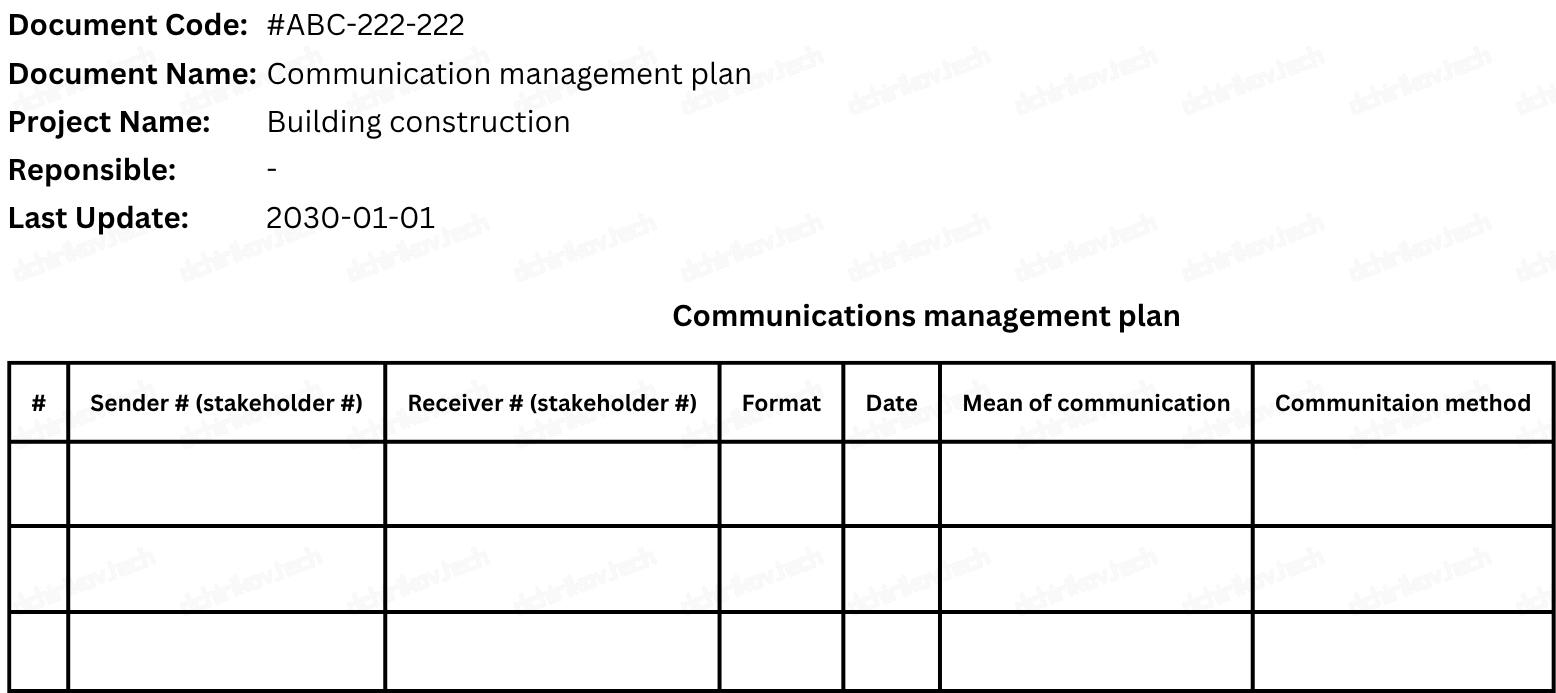
Communications Management Plan
It is a result of the Plan Communications process and, at the same time, an analysis of the aspects of communication described above. It can have any format; below is just one example:
10.2 Manage Communications
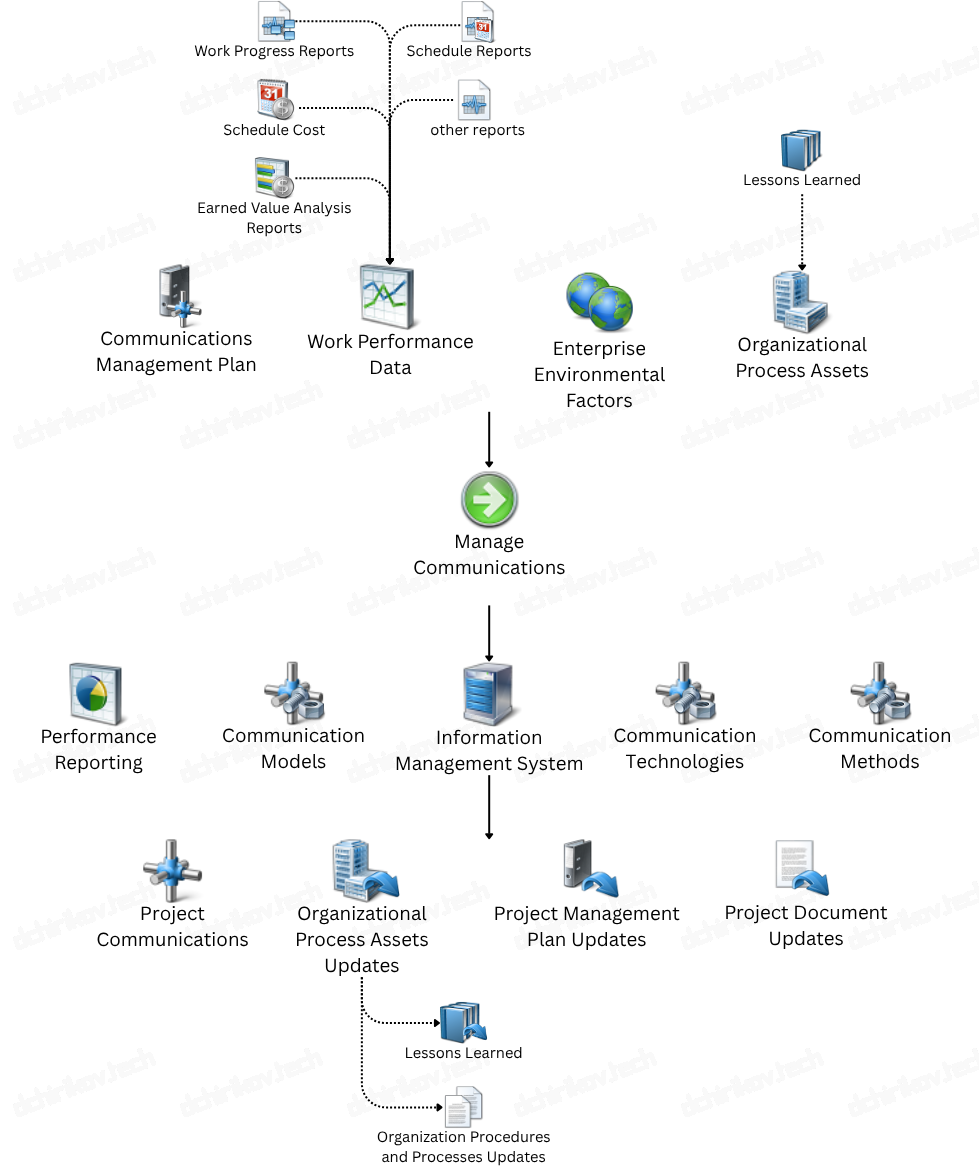
This is a new process introduced in PMBoK 5. Its responsibilities include creating, collecting, storing, distributing, and using project status information in accordance with the Communications Management Plan.
Performance Reporting
The format of each report should be developed during the Plan Communications Management process and depends on the project’s needs. Here, let’s review the basic rules for reporting according to the PMI methodology:
- reports should provide the information that the recipient (Stakeholder) needs;
- reports should be formatted in accordance with the requirements developed during the Plan Communications Management process;
- reporting, in one way or another, is a look into the past. The project manager’s job is, to a greater extent, to look into the future—reports should be designed to meet this goal. In particular, reports should provide an overview of the problems that arose during the project and propose solutions;
- reports should contain metrics that evaluate the effectiveness of the project. PMI’s primary performance evaluation tool is Earned Value Analysis;
- reports should contain plausible information, i.e., what is actually happening;
- reporting must be provided not only on the Time, but also on Cost, Quality, and Scope;
- response to the report is very important. If there is no response, it means either the Stakeholder has been provided with data that is uninteresting, or has lost interest in the Project altogether;
- without considering each specific case, reports can be divided into the following types:
- Project Status Report. A general overview report based on key performance indicators;
- Progress Report. Describes what has been achieved to date;
- Trend Report. Based on historical information accumulated over the course of the Project, it identifies any project performance trends;
- Forecasting Report. Forecasts the future progress of the Project;
- Variance Report. Overview of deviations between the baseline planned indicators in the Planning Process Group and actual ones;
- Earned Value Report. Should contain all Earned Value Analysis indicators, accompanied by a trend chart of Earned Value changes for clarity;
- Lessons Learned Documentation. Contains accumulated information about the project’s successes and failures.
Distribute Information
Sharing of information identified for sharing during the Plan Communications Management process. The format of the information to be distributed should also be specified in the Communications Management Plan.
While the Project Manager does not necessarily perform the actual Distribute Information process, their job is to manage it. Remember that the Project Manager is always responsible for the accuracy of the information provided, whether directly or indirectly.
Storing Information
The Project Manager is responsible for ensuring centralized storage of all project information. In today’s world, this typically involves a corporate information system that allows for the assignment of user roles and the provision of information in the user’s context. The storage system must comply with the organization’s security policy.
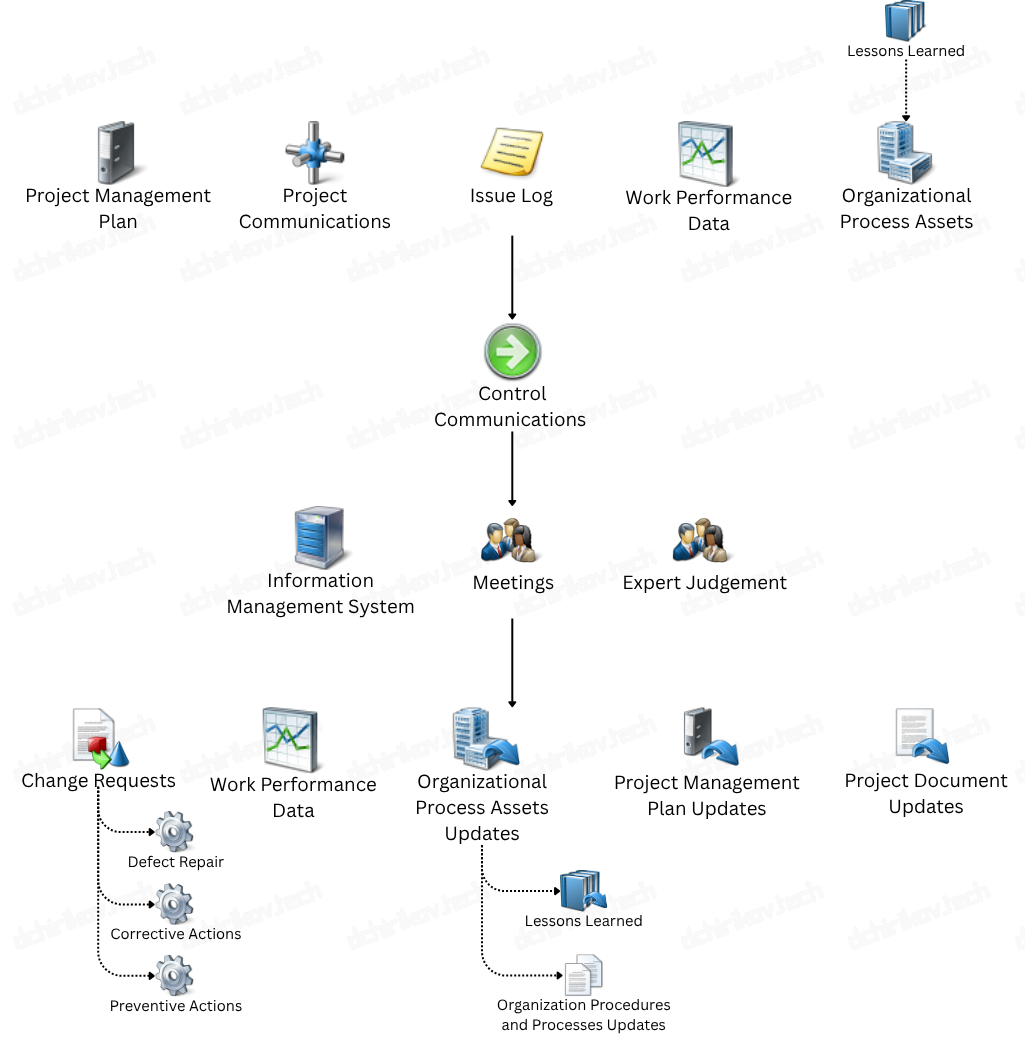
10.3 Control Communications
This process is also new and necessary for monitoring the effectiveness of communications. For example, if the Project Manager or any Stakeholder is dissatisfied with the effectiveness of the communications described in the Communications Management Plan, structured, and executed accordingly, then the communications policy must be modified (naturally, this change must be implemented through the Integrated Change Control process).